
Native Molecule Preservation
Powered by TrueLink® Technology
Native Molecule Preservation Through Direct Adapter Ligation
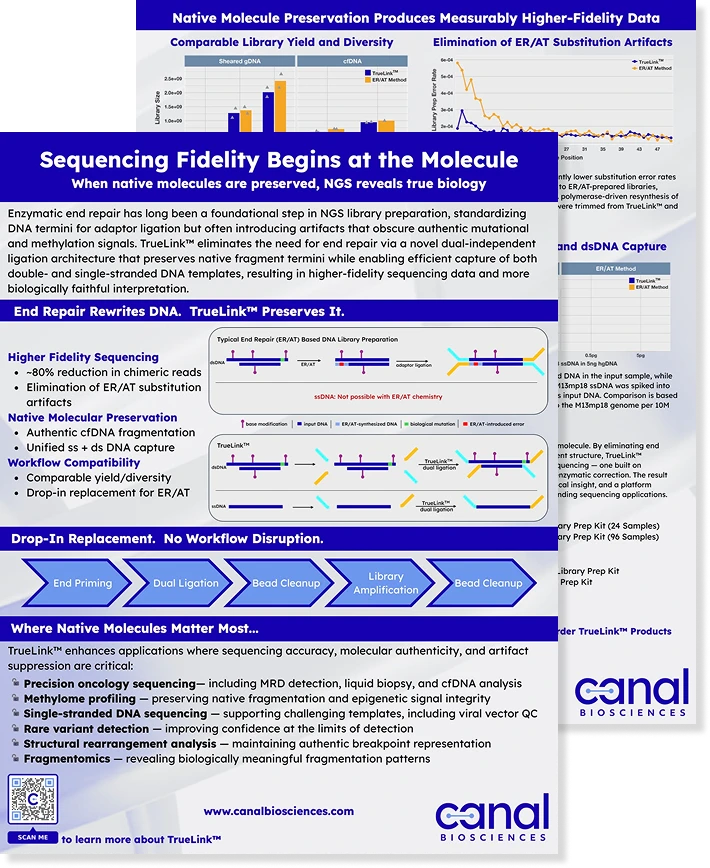
TrueLink® establishes a new approach to DNA library preparation built around native molecule preservation. It avoids conventional end repair and A-tailing, which can alter native fragment termini before sequencing. The enabling mechanism is dual direct and independent ligation. Distinct adapter and ligase systems attach adapters directly to native 5′ and 3′ termini without first trimming or filling fragment ends. This approach preserves fragment-end information, reduces ER/AT-associated preparation artifacts, and captures both single-stranded and double-stranded DNA. The TrueLink® DNA Library Prep Kit brings this technology into an Illumina-compatible workflow. Explore the product page for workflow details, performance data, and evaluation options.
What Makes TrueLink® Different?
TrueLink changes the fundamental logic of DNA library preparation.
Instead of modifying fragment ends through conventional end repair/A-tailing, TrueLink attaches adapters directly to native DNA termini.
End repair-free DNA library preparation
Attaches adapters to native DNA termini without end repair/A-tailing.
Native molecule preservation
Preserves fragment-end information that ER/AT workflows alter, overwrite, or obscure.
Dual direct and independent ligation
Joins adapters directly to native 5′ and 3′ termini using distinct adapter/ligase systems that can be performed together or separately.
Broader DNA conversion
Generates libraries from both double and single-stranded DNA present in the input sample.
Illumina-compatible architecture
Supports standard P5/P7-compatible sequencing workflows while preserving native molecular structure.
Customizable for sequencing platforms
TrueLink adapters and ligation workflows can be tailored for platform-specific indexing requirements and partner workflows.
Why Has Traditional NGS Library Preparation Become a Limiting Step?
For many years, DNA library preparation was treated primarily as an enabling workflow: convert fragmented DNA into sequencing-compatible molecules, ligate adapters, amplify if needed, and load onto the sequencer. That architecture made NGS scalable, but it also introduced a hidden limitation: conventional library preparation modifies the molecule before it is sequenced.
This distinction matters because modern sequencing increasingly depends on subtle molecular information: low-frequency variants, cfDNA fragmentation features, methylation and epigenetic signals, structural breakpoints, damage patterns, rare template populations, single-stranded DNA species, and ultrashort or degraded molecules.
In these applications, it is critical that sequencing data faithfully represents the molecule that exists in the original sample.
Why Did End Repair Become the Practical Default?
Conventional ER/AT library preparation became standard not only because it worked, but because the underlying enzymology was familiar, available, and reliable. Polymerases, nucleases, kinases, and T4 DNA ligase-based adapter ligation were established molecular biology tools that could be assembled into robust workflows.
Historically, the field has lacked an equally practical enzymatic alternative. To build libraries without end repair, one must attach sequencing adapters directly to native DNA molecules that may contain heterogeneous, overhanging, partially single-stranded, or otherwise irregular termini.
The practical barrier to native molecule preservation was not conceptual. Researchers understood the value in avoiding “molecular remodeling” or “enzymatic alteration”. The barrier was enzymatic: the field did not have access to enzymes capable of joining adapters directly to native, heterogeneous DNA termini without first polishing the substrate into a uniformly A-tailed, ligatable form.
TrueLink provides molecular tools to achieve native molecule preservation through a fundamentally different architecture: splint-free, chemically directed adapter ligation to native DNA termini.
What Are the Hidden Costs of ER/AT-Based Library Preparation?
End repair is often described as an enzymatic polishing step. In reality, it is an enzymatic remodeling step involving DNA re-synthesis and elimination.
During end repair and A-tailing, polymerases and nucleases can remove native bases, fill-in overhangs, extend from nicks or gaps, resynthesize damaged regions, and alter the original composition including fragment-end structure. Those reactions create ligation-compatible molecules, but they can also obscure or replace biologically meaningful information.
Three ways conventional library preparation introduces systemic artifacts to sequencing data
1
End repair rewrites native DNA termini
DNA fragments with recessed or overhanging termini are trimmed or filled in during ER/AT, altering the native molecular substrate before sequencing.
2
ER/AT creates end-associated sequencing artifacts
End repair resynthesis introduces sequence changes near fragment termini, producing elevated error rates at the beginning of sequencing reads that require trimming, filtering, or other computational correction.
3
Native fragment ends contain biological signal
cfDNA fragment size, end position, end motif, overhang structure, and periodicity reflect nuclease activity, chromatin organization, tissue of origin, and disease-associated fragmentation patterns.
How Does TrueLink Work?
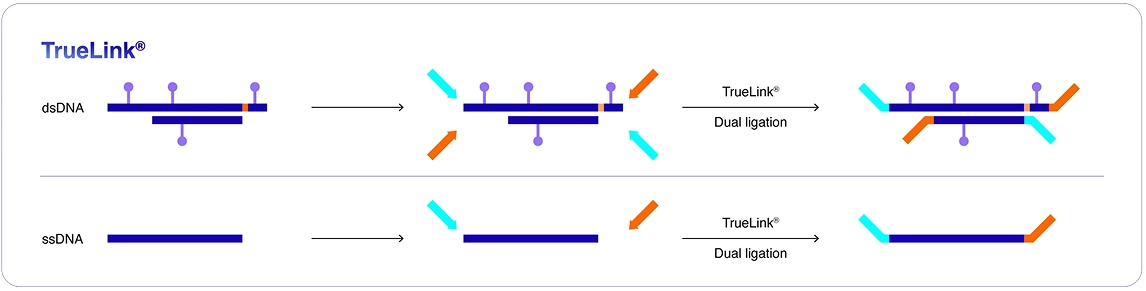
TrueLink uses direct and independent ligation to attach adapters to native 5’ and 3’ DNA termini without conventional End Repair/A-Tailing, preserving the native DNA molecule structure.
- Traditional ER/AT chemistry can alter native DNA sequence, impacting data integrity
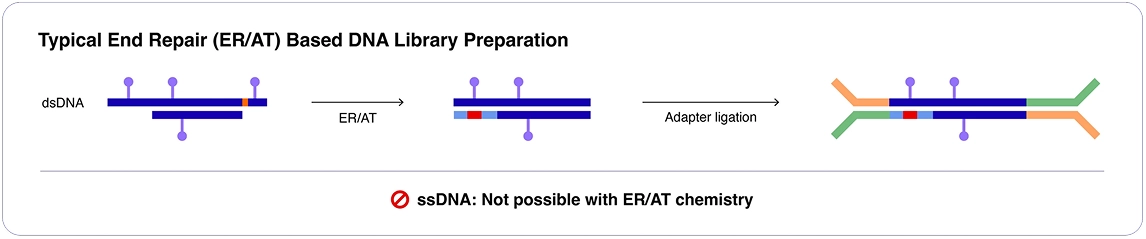
- Dual direct and independent adapter ligation preserves DNA structure and protects sequence fidelity
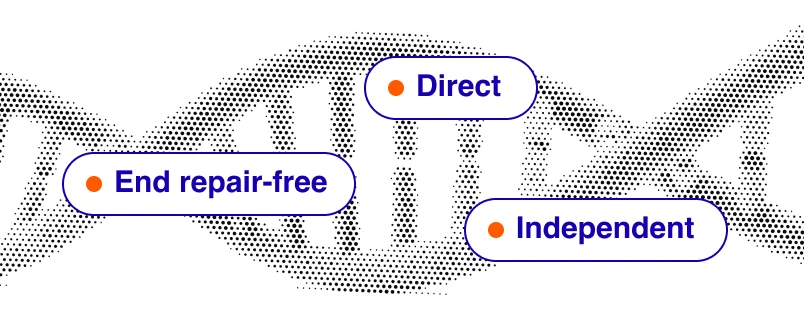
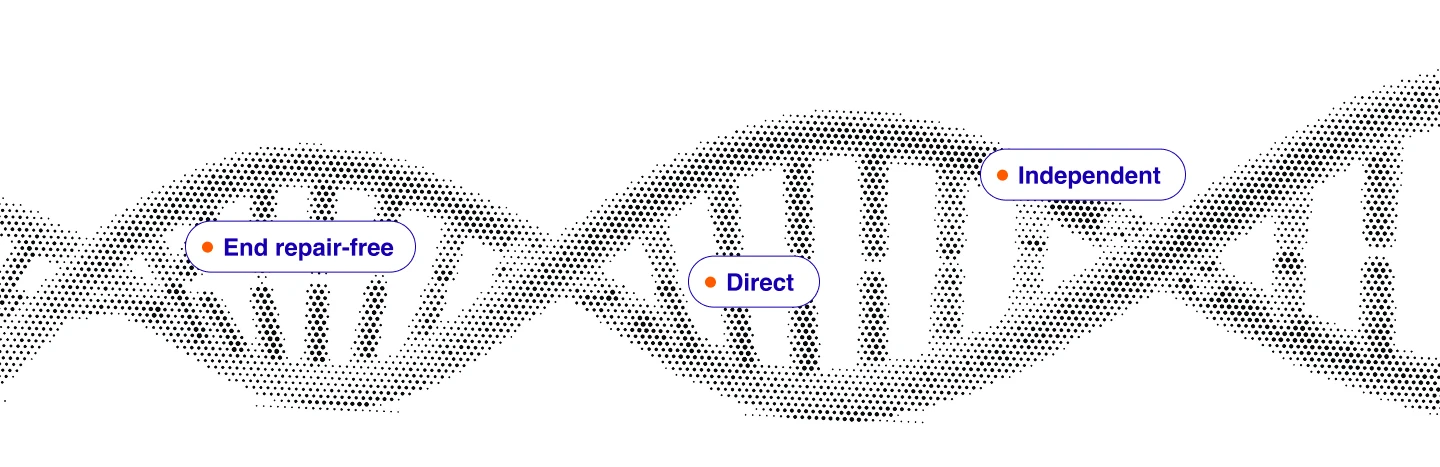
End repair-free
No fill-in, no trimming, and no A-tailing are performed before adapter ligation.
Direct
Adapters join directly to native DNA termini without first standardizing DNA ends.
Independent
5′ and 3′ end ligations use distinct adapter/ligase systems that can be performed together or separately.
Learn more about preparing NGS libraries with TrueLink.
Applications for TrueLink Library Preparation
TrueLink® is designed for NGS applications where native molecule preservation, artifact reduction, and access to heterogeneous DNA populations are required.
cfDNA and liquid biopsy research
Preserves native cfDNA fragment-end features that conventional ER/AT workflows can alter, supporting cfDNA analysis, liquid biopsy assay development, and low-input sequencing research.
Fragmentomics
Preserves native fragment termini and end-associated molecular features that may carry biologically meaningful information.
Single-stranded DNA capture
Generates libraries from both double and single-stranded DNA present in the input sample expanding access to template populations that conventional double-stranded workflows may underrepresent.
Low-input, damaged, and degraded DNA
May support research applications where conventional end repair can alter native molecular structure or reduce access to fragile template population.
Rare variant and structural variant research
Reduces preparation-induced chimeras and end-associated substitution errors that can complicate artifact-sensitive variant analysis.
Methylation and epigenetic research
Provides a foundation for methylome workflows built around native molecule preservation and reduced enzymatic rewriting before sequencing.
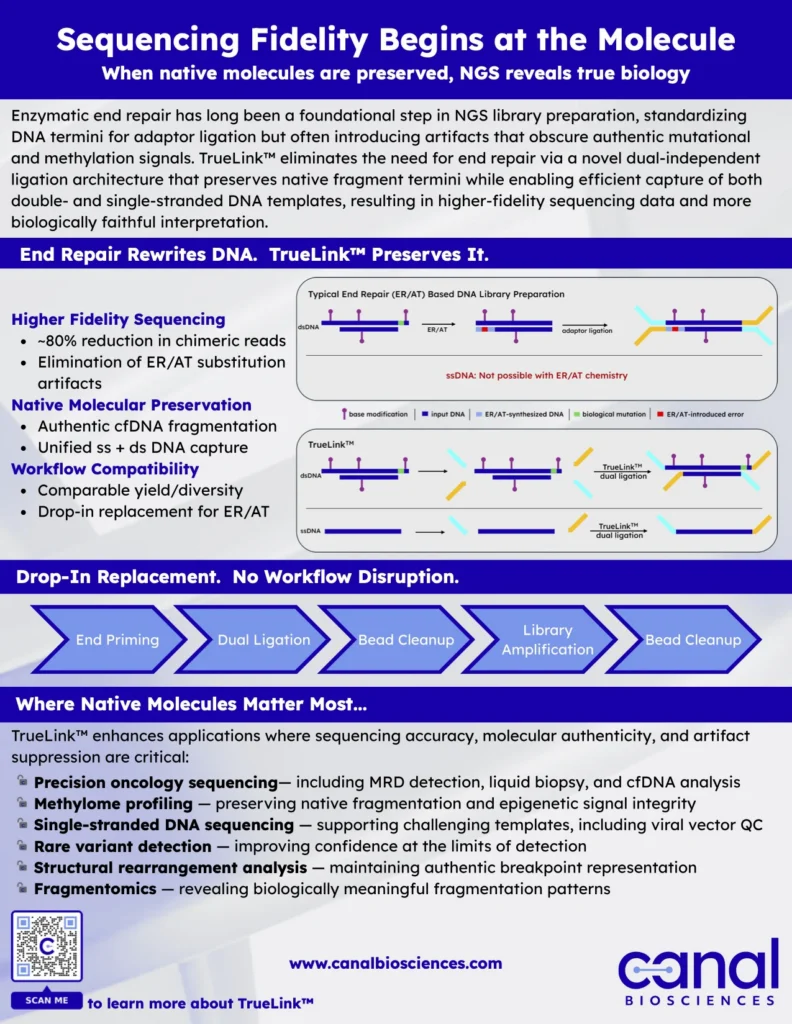
> 80% fewer chimeric reads
Reduced Read 2 substitution errors
High library diversity
Even GC coverage
For detailed performance figures, experimental context, and data interpretation, see the TrueLink DNA Library Prep Kit product page.
Product Resources
TrueLink® DNA Library Prep Kit FAQs
How is TrueLink different from conventional ER/AT-based library preparation?
Conventional DNA library preparation typically uses end repair and A-tailing to standardize DNA fragment ends before adapter ligation. TrueLink avoids conventional ER/AT and instead uses dual direct and independent ligation to attach adapters to native DNA termini.
What does dual direct and independent ligation mean?
Direct means adapters are joined to native DNA termini without ER/AT-driven remodeling. Independent means the 5′-end and 3′-end ligations use distinct adapter/ligase systems that can be performed together or separately depending on workflow requirements.
Why is native molecule preservation important?
Many modern NGS research applications depend on subtle molecular features such as fragment ends, cfDNA fragmentation patterns, damage-associated signatures, methylation-related information, and rare template populations. Workflows that modify the molecule before sequencing can obscure those features.
Does TrueLink capture single-stranded DNA?
TrueLink is designed to generate libraries from both double-stranded and single-stranded DNA present in the input sample. The current workflow does not preserve information that allows post hoc assignment of an individual sequencing read to a single-stranded or double-stranded origin.
Is TrueLink compatible with Illumina sequencing?
The TrueLink DNA Library Prep Kit generates Illumina-compatible P5/P7 library architecture for standard downstream sequencing workflows.
Legal and Disclaimers
Products, technologies, workflows, data, figures, trademarks, and related content described on this page are protected by one or more patents, patent applications, trademarks, copyrights, trade secrets, and/or other intellectual property rights owned or controlled by Canal Biosciences Inc. (“Canal”). The purchase or use of any Canal product conveys no license, express or implied, under any Canal intellectual property or third-party intellectual property rights, except as expressly stated in Canal’s applicable Product & Service Terms and Conditions or other written agreement.
TrueLink® products are intended for Research Use Only and are not intended for use in diagnostic procedures, clinical decision-making, therapeutic applications, or administration to humans or animals. References to potential applications, including liquid biopsy, methylation profiling, rare variant detection, structural variant analysis, fragmentomics, single-stranded DNA analysis, or other sequencing applications, are provided for research-use and informational purposes only and do not constitute clinical validation, diagnostic performance claims, regulatory clearance or approval, or fitness for any particular use.
Performance may vary by sample type, input amount, DNA quality, fragmentation method, workflow conditions, sequencing platform, assay design, and analysis method. Users are responsible for determining whether Canal products are suitable for their intended research use and whether any additional third-party rights, approvals, licenses, or permissions are required.
Purchases, evaluations, custom products, services, and product use are subject to Canal Biosciences’ applicable Product & Service Terms and Conditions or other written agreement. For more information, please contact info@canalbiosciences.com.
